
IRON & ASPHALT - 9 MUST-KNOW EXERCISES EVERY MOTORCYCLE RIDER MUST MASTER
To the uninitiated, motorcycle touring looks like passive sitting. But any rider who has crossed continents, carved through tight mountain switchbacks, or battled fierce highway crosswinds knows the truth: long- distance riding is an athletic endeavor. True riding endurance isn't just built on the saddle; it is forged in the gym.
When you embark on a multi-day riding expedition, your body acts as the ultimate dampening system, chassis stabilizer, and control center. Fatigue is the silent enemy of safety, it slows your reaction times, degrades your situational awareness, and ruins your cornering precision. By building a body conditioned specifically for the physical stresses of the road, you turn grueling long-distance miles into effortless cruising. Here are the 9 fundamental exercises every rider needs to master to bulletproof their body for the open road.
1. THE SQUAT – THE FOUNDATION OF BIKE CONTROL
 The squat is the undisputed king of lower-body development, targeting the quadriceps, hamstrings, glutes, and hip flexors. For a rider, your legs are your primary connection to the machine's mechanical center of gravity.
Expedition Benefits:
- Active Suspension Mimicry: When hitting unexpected potholes, gravel stretches, or corrugated dirt roads, standing up slightly on the footpegs allows your legs to act as secondary shock absorbers, sparing your spine.
- Effortless Bike Maneuvering: Weighting and unweighting the footpegs is how you efficiently initiate deep leans and rapid transitions in tight twisties without relying solely on handlebar input.
- Endurance in the Saddle: Strong glutes and quads distribute your weight better across the seat, eliminating the localized pressure points that cause "saddle sores" and lower body numbness after six hours on the highway.
2. THE DEADLIFT – LOWER BACK & POSTERIOR CHAIN BULLETPROOFING
 Deadlifts recruit nearly every muscle from your calves up to your upper traps, focusing heavily on the hamstrings, glutes, erectores spinae (lower back), and core. It builds raw, functional structural integrity.
Expedition Benefits:
- Fatigue-Free Cruising Posture: Hours spent leaning slightly forward over a tank bag or holding up a heavy touring cruiser can cause agonizing lower back spasms. A strong posterior chain effortlessly maintains a neutral spine against gravitational pull.
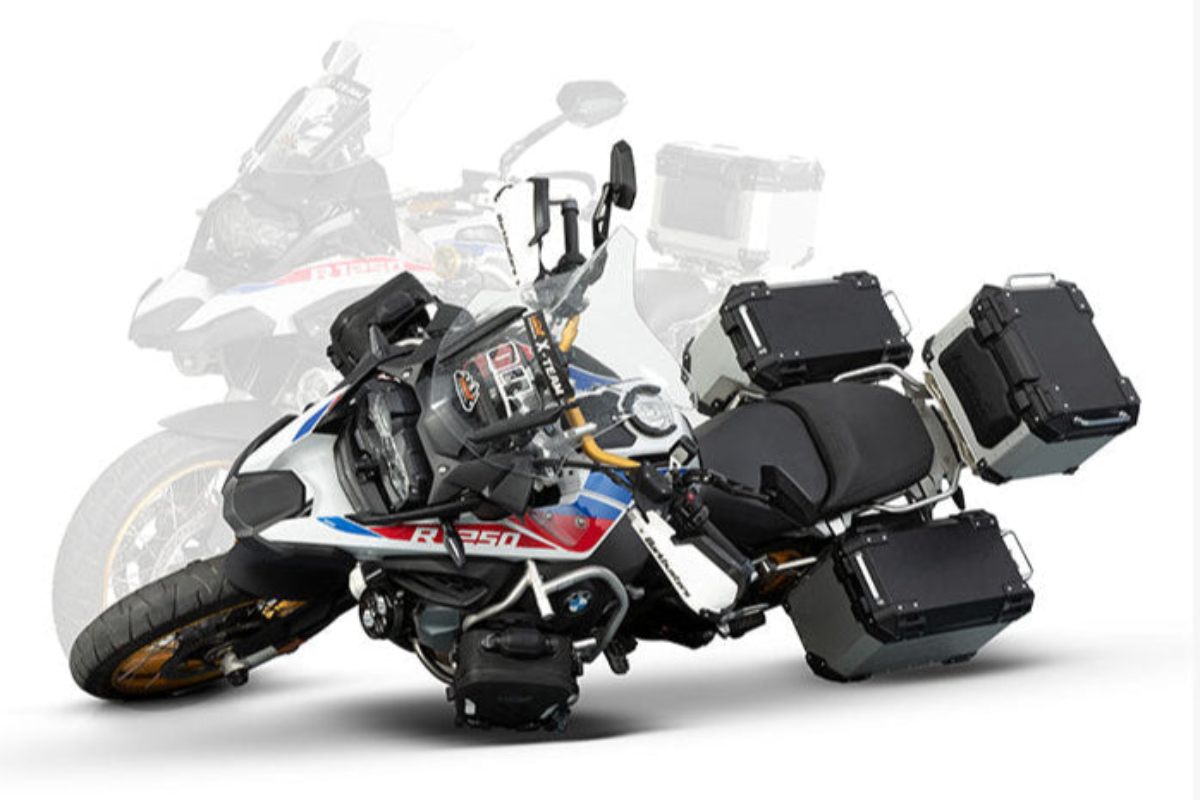
- Manhandling Heavy Machinery: Whether you are lifting a fully loaded 250kg adventure bike after an off-road tip-over, or pulling a massive tourer backward out of an awkward, sloped parking spot, deadlift power prevents debilitating back injuries.
3. PLANKS – ISOMETRIC CORE STABILITY FOR WIND RESISTANCE
 The plank is an isometric hold that targets the rectus abdominis, transversus abdominis, and obliques. Unlike dynamic crunches, it trains the core to resist movement, keeping the torso solid and unified.
Expedition Benefits:
- Buffeting Shield: On unfaired naked bikes or when blasting through open plains with severe crosswinds, your upper body behaves like a sail. A rock-solid core anchors your torso so your arms can remain completely relaxed on the handlebars.
- Isolating Steering Inputs: If your core is weak, you will inadvertently lean on the bars for support. A strong plank structure allows you to support your body weight with your midsection, ensuring your hands apply clean, delicate steering inputs free of tense, accidental movements.
4. PULL-UPS / ROWS – UPPER BACK STRENGTH FOR COCKPIT CONTROL
 Pulling movements like pull-ups and bent-over rows target the latissimus dorsi, rhomboids, rear deltoids, and brachioradialis (forearms). These muscles manage your pulling mechanics and support your thoracic alignment.
Expedition Benefits:
- Wrestling the Bars: Fighting high-speed tank-slappers, governing wide handlebars on heavy adventure bikes over technical rocky terrain, or pulling back on the bars to loft the front wheel over obstacles requires immense upper-back endurance.
- Anti-Hunch Conditioning: Long miles breed a slouched, rounded shoulder posture. Heavy pulling exercises counteract this, pulling your shoulders back into proper alignment, which opens up the chest and increases lung capacity during high-altitude alpine passes.
5. PUSH-UPS – BRACING STRENGTH & FRONT-END FEED
 Push-ups develop the pectoralis major, anterior deltoids, and triceps, while simultaneously demanding stabilization from the entire anterior chain.
Expedition Benefits:
- Heavy Braking Stabilization: Under hard, emergency braking conditions, momentum transfers your body weight violently forward. Strong triceps and a firm chest allow you to brace your upper body smoothly against the tank without locking your elbows or unsettling the front tire's traction contact patch.
- Endurance Over Rough Terrain: Constantly absorbing the vertical feedback and jolts sent up through the front forks on unpaved gravel trails requires resilient chest and arm musculature to maintain an authoritative, active grip.
6. FARMER’S CARRY – GRIP ENDURANCE & FOREARM RESILIENCY
 The farmer’s carry involves walking set distances while holding heavy dumbbells or kettlebells at your sides. It tests total-body tension, traps, and specifically, your crushing and holding grip strength.
Expedition Benefits:
- Eliminating Arm Pump & Clutch Fatigue: Navigating stop-and-go city traffic on a heavy cruiser or feathering a stiff clutch lever for hours across technical off-road single tracks can cause crippling forearm cramps ("arm pump"). Grip endurance keeps your finger manipulation fluid and responsive.
- Throttle Micro-Control: When your hands are exhausted, smooth throttle application becomes impossible. Maintaining grip reserve strength allows you to execute precise, millimeter-accurate throttle adjustments even at the end of a grueling 10-hour day.
7. NECK ISOMETRICS – NEUTRALIZING HELMET WEIGHT & WIND DRAG
 Neck isometric exercises utilize hand resistance against the front, back, and sides of the head to strengthen the sternocleidomastoid, splenius capitis, and upper trapezius without hyper-extending the cervical spine.
Expedition Benefits:
- The Helmet Leverage Equation: Consider a premium modular or adventure helmet weighting approximately m = 1.6 ext{ kg}. Traveling at highway speeds creates a significant aerodynamic drag force (F_d) acting against the surface area of the helmet. This creates a constant rotational torque on your neck vertebrae.
- Fatigue Mitigation: By building dense, conditioned neck musculature, your neck easily resists this continuous wind resistance. You will completely eliminate the burning tension at the base of the skull, keep your head perfectly stable for a clear field of vision, and execute rapid, flexible head-checks safely before lane changes.
8. MOBILITY & FLEXIBILITY ROUTINE – ERADICATING HIPS & JOINT STIFFNESS
 A focused dynamic routine focusing on the worlds greatest stretch, 90/90 hip switches, and deep thoracic rotations ensures your joints retain their full, unhindered range of motion.
Expedition Benefits:
- Fluid Swing-Overs: High-clearance adventure bikes outfitted with tall panniers, top boxes, and dry bags require exceptional hip mobility just to mount and dismount the motorcycle elegantly without tipping it over.
- Compact Ergos Comfort: On sports-tourers or aggressively designed sportbikes, your hips, knees, and ankles are kept tightly bent for hours. Superior joint mobility keeps blood flowing freely, preventing the deep, distracting ache that forces you to constantly pull over to stretch.
9. CALF RAISES – ANKLE STABILIZATION & PEG TRACTION

Calf raises isolate the gastrocnemius and soleus muscles while simultaneously strengthening the Achilles tendon and the intrinsic stabilizing muscles of the foot arch.
Expedition Benefits:
- Secure Platform Lock: Your footpegs are tiny metal perches. Strong calves allow you to lock your feet onto the pegs firmly, standing high on your toes when necessary to scan ahead over crests or balance through sand washes.
- Precise Foot Lever Action: Rear brake modulation and quick, crisp up-and-down gear shifts require subtle, rapid ankle articulation. Conditioned calves prevent localized foot fatigue, guaranteeing you never miss a critical shift or lock up the rear tire due to a clumsy, tired foot input.