
The After-Rain Ritual: Essential Care for Your Motorcycle
Riding in the rain can be a cinematic experience, but for your motorcycle, it’s a battle against corrosion, grit, and electrical gremlins. In a region like the UAE, where rain often leads to sudden "flash floods" or heavy standing water, the aftermath of a ride is more critical than the ride itself.
Here is your comprehensive guide to post-rain motorcycle care to ensure your bike stays as high-performance as the day you bought it.
1. The "Deep Rinse" is Non-Negotiable
Rainwater isn’t just water; it’s a cocktail of road oils, grime, and—in many areas—salt or acidic contaminants. If you’ve ridden through flooded streets, that water likely contains sewage or industrial runoff.
- Action: Rinse the bike with low-pressure water immediately. Avoid high-pressure washers near the dashboard, bearings, or chain, as they can force water into sealed areas where it will cause hidden rust.

2. The Drivetrain: Clean, Dry, and Lube
Your chain is the most vulnerable part of your bike after a wet ride. Rain washes away the protective lubricant, leaving the metal exposed to oxygen and road grit.
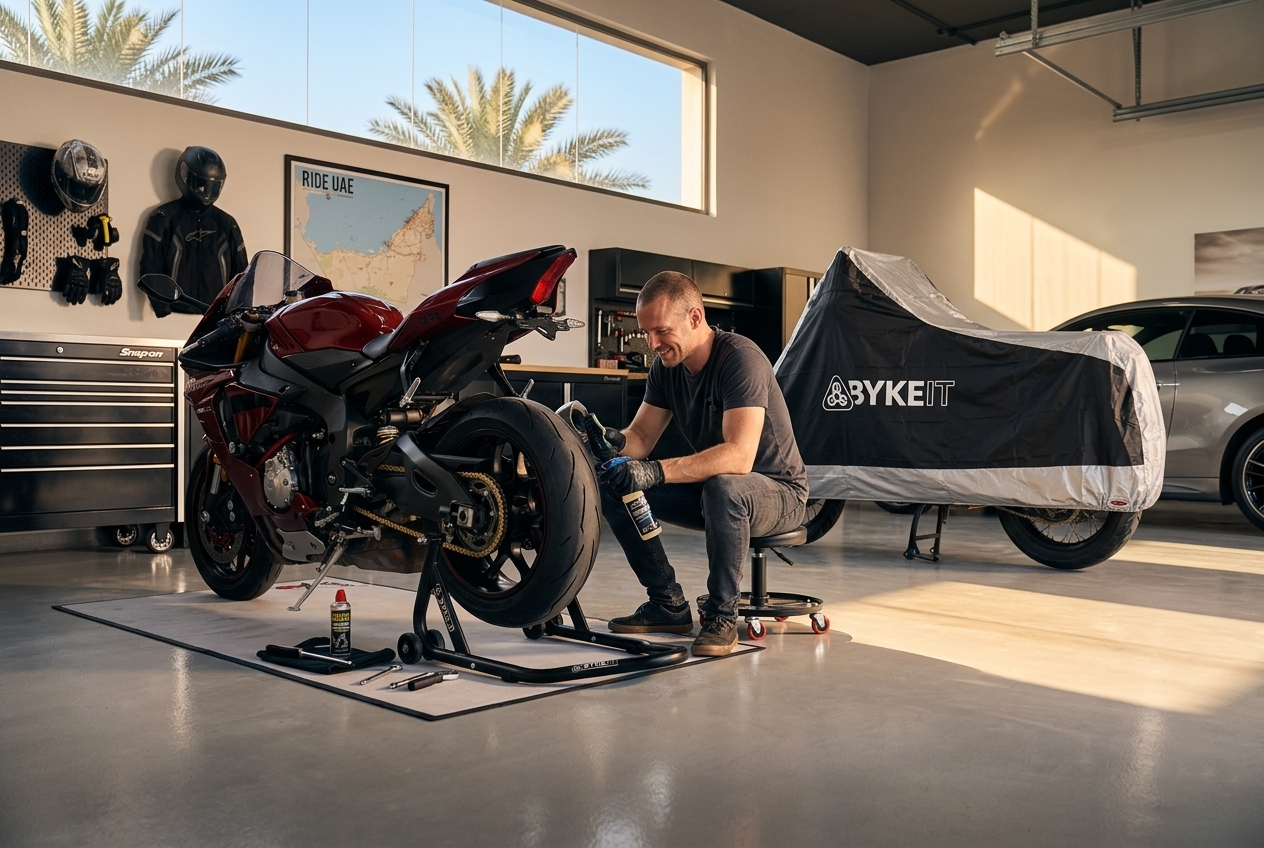
- Action: Use a dedicated chain cleaner and a brush to remove the "grinding paste" (mud + old oil). Dry it thoroughly with a microfiber cloth before applying a high-quality chain lubricant. Pro Tip: Applying lube while the chain is still wet is useless—the oil won't stick!
3. Brake System Inspection
Wet brakes are less effective, but the real danger comes after the ride. Road grit can get lodged between your pads and discs, causing "scoring" or premature wear.
-
Action: Spray brake cleaner on the rotors and calipers. Once dry, take a short, slow ride and apply the brakes gently several times to "burn off" any remaining moisture and ensure they are biting correctly.
4. Electrical & "Hidden" Moisture
Water loves to sit in spark plug wells, battery terminals, and switchgear.
-
Action: If you’ve gone through deep water, check your airbox to ensure the engine hasn't "inhaled" any water. Use a leaf blower or compressed air to blow water out of the nooks and crannies (around the engine bolts and handlebar switches). Apply a dab of dielectric grease to exposed electrical connections to prevent future corrosion.
5. Pivot Points & Moving Parts
Don't forget the small things. Your kickstand pivot, gear shifter, and brake levers all have moving joints that can become "crunchy" after being submerged in muddy floodwater.
-
Action: A quick spray of WD-40 or a specialized pivot lubricant on these points will keep your controls feeling smooth and responsive.

Safety Check: Did the Water Do Damage?
If you rode through water that reached your axles or higher, you must perform these checks before your next trip:
-
Oil Check: Look at your oil sight glass. If the oil looks "milky" or like a latte, water has entered the engine. Do not start the bike. You need an immediate oil flush.
-
Tire Pressure: Drastic temperature changes (cold rain hitting hot tires) can cause pressure fluctuations. Always re-gauge your tires the next morning.
- Light Scrutiny: Check your headlamps and indicators for "fogging" or condensation inside the lens, which indicates a seal has failed.