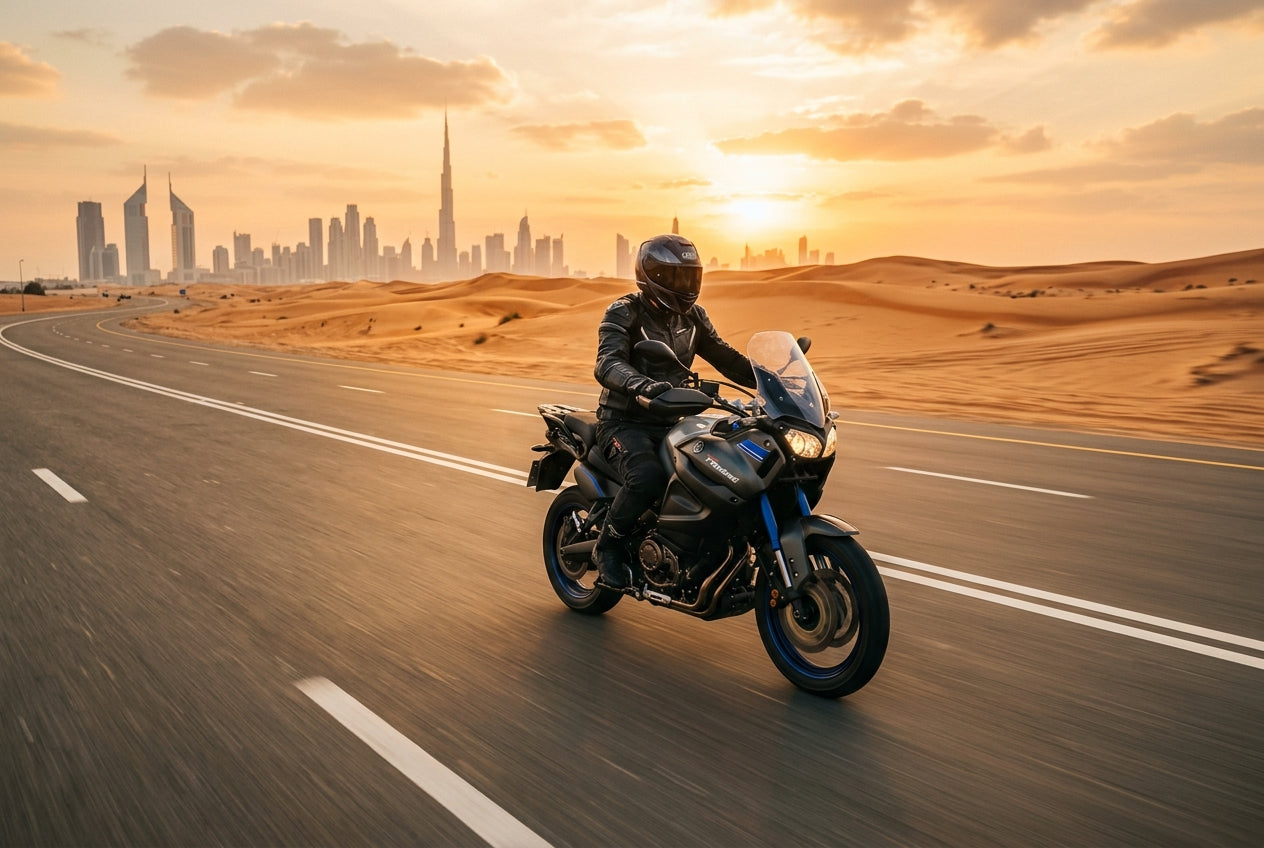

Article: Sand, Fog and Wind: How to Ride Safely When Visibility Drops
Sand, Fog and Wind: How to Ride Safely When Visibility Drops
Riding season in the UAE is the reward for surviving summer. The air is cooler, the roads are open, and every weekend ride feels like a postcard. But the same season brings its own surprises: a fog bank sitting on the highway at sunrise, a shamal wind pushing sand across the tarmac, or a gust that shoves you sideways just as a truck passes.
None of these conditions must end your ride, but all of them punish riders who treat them like a normal day. This guide covers how to read the conditions, how to adjust your riding, and which gear makes the biggest difference when you can't see far ahead.
Why Visibility Drops So Fast Here
The UAE can swing from crystal clear to very poor visibility within a few kilometres. Winter fog tends to form on cool, humid early mornings, especially near the coast and on open inland plains. Windy days lift fine sand and dust from the desert edge and drop it onto the road. Different causes, same result: you have less time to see, react and stop.
One rule ties everything together: ride at a speed that lets you stop within the distance you can actually see. If you can only see 50 metres, you need to be able to stop well inside 50 metres and remember that stopping distances are longer on damp or sandy tarmac. Follow variable speed limit signs and official weather warnings; they exist for a reason.
Riding in Fog

1. Decide before you leave. Check the forecast and any official fog or dust alerts. If the ride can wait an hour, let it. Fog often thins quickly once the sun is up.
2. Slow down and open the gap. Double your normal following distance. Brake lights appear late in fog, and riders who follow too closely are how chain collisions start.
3. Use dipped beam, never high beam. High beam bounces off water droplets and washes out your own view. Keep your headlight, tail light and indicators clean so others can pick you out early.
Gear note: a stock headlight is designed to be seen by others as much as to light the road. Auxiliary lights mounted lower and wider give approaching drivers a clearer, more recognisable signature, and a low mounting point throws less glare back into your own eyes. The Loboo L7S and Loboo L11 are popular choices, the L12T is a compact high/low option, and the L7X with built-in DRL adds daytime visibility. Aim them down so they don't dazzle other road users, check local regulations for use on public roads, and consider a quick-detach mount so you can fit or remove them in seconds.
4. Don't ride on someone else's tail light. It feels safer, but you are borrowing their reaction time. If they brake hard or stop, you have nowhere to go. Keep your own space and your own speed.
5. Beat the fogged-up visor. Breath and cold air are a perfect recipe for condensation. Use a Pinlock-style anti-fog insert, crack the visor open a notch for airflow, and keep your breath deflector in place. Keep the inside of your helmet clean too, because sweat and dust residue make fogging worse. When you're shopping, check the product description for Pinlock compatibility or ask our team, and browse the full helmet range. A quick wipe of the liner with Motul M2 Helmet Interior Clean keeps things fresh between rides.
6. Respect the surface. Fog leaves a thin film of moisture on the road. Painted lines, metal covers and tar strips get slick. Brake earlier and more gently, and stay off the lines when leaning.
7. If it gets too dense, get off the road. Pull into a safe area well clear of the carriageway, switch on your hazard lights, and wait behind a barrier if you can. Never stop in a live lane, and never keep going just because you're already committed.
Riding in Sand and Dust

Sand is one of the most underestimated hazards on UAE roads. It collects on roundabouts, road shoulders, slip roads, construction zones and any stretch bordering the desert, and the wind redistributes it constantly. A thin layer on tarmac can feel like riding on marbles.
Where to expect it. Look for lighter or darker patches on the road surface, faint ripples, and sand streaming across the lane in low sheets. Roundabouts and curves after a windy day deserve extra caution.
How to ride it.
- Slow down before the patch, not on it.
- Keep the bike upright and your inputs smooth: no sudden throttle, no grabbing the front brake, no sharp steering.
- If you must cross a short patch, hold a steady line and roll through with a light, constant throttle.
- Look where you want to go, not at the sand.
- Give other vehicles more space. Their tyres kick sand up, and they may brake or swerve for it.
Protect your eyes and your visor. Never wipe a dusty visor with a dry cloth. Fine sand acts like sandpaper and leaves micro-scratches that cause dangerous glare at sunrise and sunset. Rinse or dab with a damp microfibre cloth first. A well-sealing full-face or adventure helmet, such as the AGV AX9 or Bell MX-9 Adventure MIPS also helps keep dust out of your face and cuts low-sun glare with its peak.
Riding in Strong Wind

Wind rarely announces itself. It hits at gaps between buildings, on bridges and overpasses, at the end of a tunnel, and as you pass or are passed by a truck.
- Stay relaxed. A tight grip transfers every gust straight to the bars. Keep your elbows soft and let the bike move a little beneath you.
- Get low and grip with your knees. Tuck in behind the screen and squeeze the tank. This stabilises you and reduces the surface the wind can push against.
- Lean into it, don't fight it. Expect a sudden release when the gust stops, such as when you pass behind a truck, and be ready for the bike to snap back.
- Position yourself. Leave room on the downwind side of your lane so a shove doesn't push you toward another vehicle.
- Be careful alongside trucks. Large vehicles create turbulence and a sideways push as you pass. Pass decisively and never linger in their blind spot.
- Keep loads low and balanced. Tall or uneven luggage acts like a sail. Secure everything and keep heavy items low and close to the centre of the bike.
If the wind comes with blowing sand, treat that as a double warning. A true shamal day is often a good day to stay home.
Staying Connected and on Course
Low visibility is when groups get split and wrong turns happen. Agree on a plan before you set off: ride staggered, keep a larger gap than usual, and decide where you'll regroup if someone is held up.
A rider-to-rider headset makes this far easier. The Sena 60S EVO and Cardo PackTalk Edge let you warn the riders behind you about a sand patch or a slowing vehicle without taking a hand off the bars. Riding in a mixed Sena and Cardo group? See our guide on connecting a Sena and a Cardo.
For navigation, a secure, weatherproof display such as the Carpuride keeps directions clear and in your line of sight, so you aren't squinting at road signs that disappear into the haze.
Clean up properly afterwards. Sand and grit work into chains, pivots and bodywork. A quick wash with Motul Moto Wash or Motul Wash & Wax Spray takes minutes, and our guide on the best way to clean your motorcycle chain covers the rest.

Quick Pre-Ride Checklist for Low-Visibility Days
- Check forecasts and official alerts before you leave.
- Clean headlight, tail light, indicators and visor.
- Make sure your visor seals properly and your anti-fog insert is fitted.
- Check tyre pressures and tread; wet or sandy surfaces demand grip.
- Wear high-visibility or reflective elements.
- Test your lights, including any auxiliary lights, and aim them correctly.
- Charge your intercom and phone, and agree a regroup point.
- Plan to ride slower, brake earlier and leave extra room.
Know When Not to Ride
Experience isn't just about skill on the road. It's about judgement before you leave. If visibility is near zero, the wind is gusting beyond what your bike and luggage can handle, or sand is blowing across the road in sheets, waiting is the smart choice. The road will still be there when conditions improve.
Ride Prepared
Fog, sand and wind are part of riding in the UAE. With the right habits and the right gear, they become conditions you manage instead of conditions you fear. Browse the full range at Motofever or visit our team in Dubai, and we'll help you build a setup that suits your bike and the way you ride.